>>

Soft, fragrant rosewater lokum with a delicate chew and dusting of cornstarch-sugar — a timeless Turkish sweet perfect for gifting or serving with coffee.
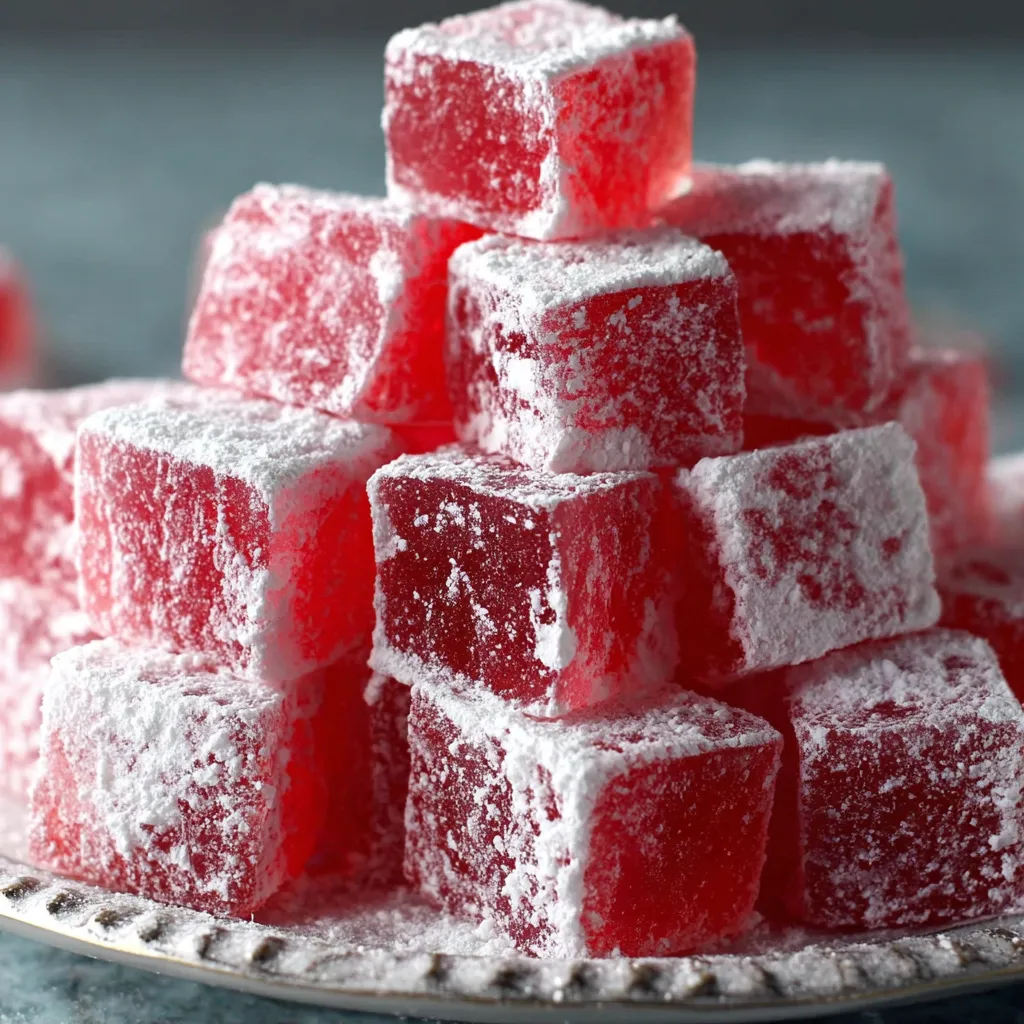
This recipe for Turkish delight — lokum — is one I return to whenever I want to make something that feels both nostalgic and celebratory. I first learned the method while traveling in Istanbul, watching a small confectioner at work in a neighborhood shop where the air was perfumed with rosewater and powdered sugar. The texture — a tender, slightly springy chew with a glossy interior and a powdery exterior — is what makes this candy so distinctive. I adapted that memory into a home-friendly process that uses straightforward pans and common pantry ingredients, and the results have become a favorite for holiday treats and homemade gifts.
What makes this version special is the careful balance of sugar and cornstarch that yields a reliable set, even in humid kitchens, and the gentle infusion of rosewater that perfumes without overpowering. I’ve learned a few practical tricks — using a heavy-bottomed pan to avoid scorching, watching the syrup closely to hit the hard-ball stage, and being patient during the long simmer so the color and flavor develop properly. When guests bite into a cube, the slow sugar release and subtle floral note always prompt questions about how it’s made.
I still remember the first box I brought home after perfecting the timing: my partner and neighbors all gathered, and the quiet joy of those little rose-scented squares was contagious. Over the years I adjusted the simmer and learned to trust visual cues more than exact times, which has made this recipe consistently successful in different kitchens.
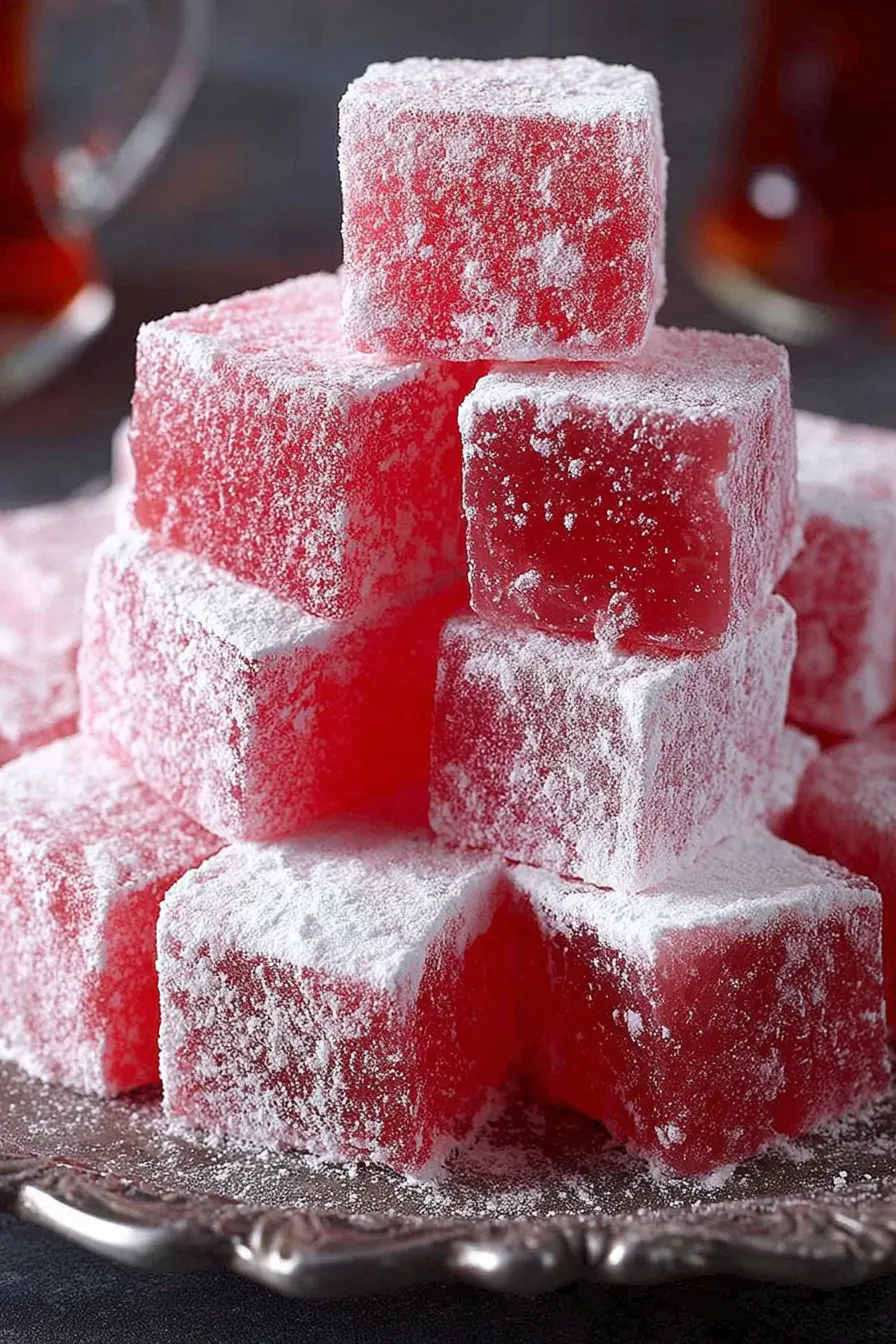
My favorite part is the ritual of cutting and dredging — it takes time, but watching the perfect little cubes come together is oddly meditative. Friends often tell me the rose flavor is just right: noticeable but not cloying. Over the years I’ve found that keeping the dredge mix slightly thicker than you think necessary helps long-term storage in boxes without sticking.
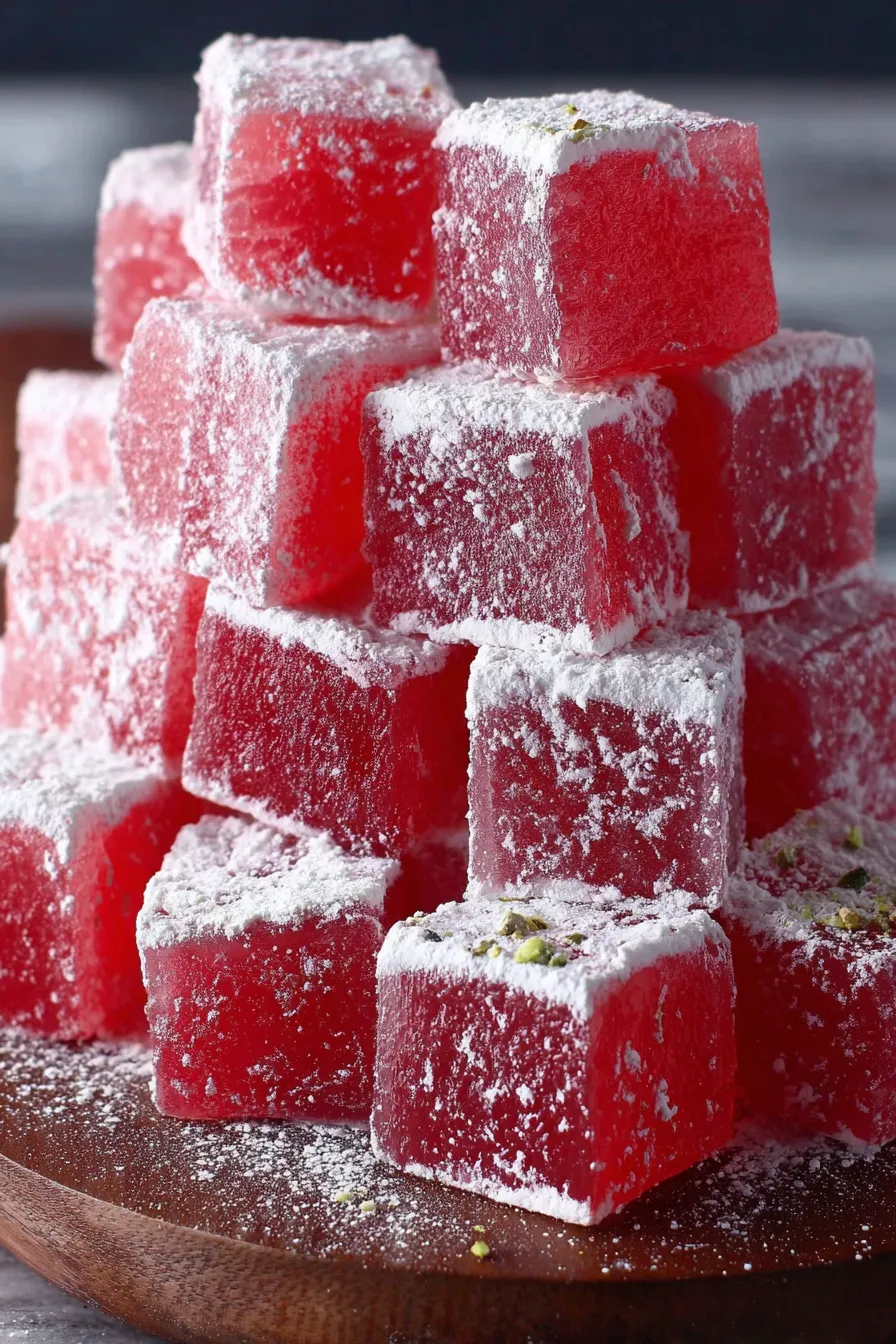
Store the finished pieces in an airtight tin or container at room temperature for up to two weeks. Layer squares between sheets of parchment or wax paper to prevent them from bonding. For longer storage, wrap individual pieces or a block of cubes in plastic and place in an airtight freezer bag — they keep well up to three months. Thaw overnight in the refrigerator to avoid condensation on the surface, then toss again in the cornstarch-powdered sugar blend before serving.
If you don’t have citric acid, replace it with 1 teaspoon fresh lemon juice; the acid helps prevent sugar crystallization. If you prefer a nutty or citrus twist, swap half the rosewater for orange blossom water or add finely ground pistachios after cutting. For color, use a few drops of gel coloring rather than liquid to avoid diluting the set. Avoid using wheat-based starches; they’ll change texture and can add an off flavor.
Traditionally served with strong, slightly bitter Turkish coffee and a glass of water, these little squares also pair beautifully with mint tea. For a modern twist, sandwich a cube between thin salted butter biscuits or serve alongside soft cheeses and dried fruits on a dessert board. Garnish with crushed pistachios or a light dusting of extra powdered sugar for a festive look.
Lokum has roots in Ottoman-era kitchens where scented sugar confections were prized. Historically made with starch and sugar and perfumed with rose, mastic, or citrus, it became associated with hospitality and gifting. Different regions of Turkey have variations — some add nuts like pistachios or hazelnuts; others flavor with mastic or orange blossom. Making lokum at home connects you to this long tradition of convivial sweet-making.
In spring, emphasize floral notes with extra rosewater or orange blossom. For autumn and winter, add warm spices such as a pinch of ground cardamom or a teaspoon of ground roasted pistachios folded into the cut cubes. When gifting for holidays, layer cubes with colored tissue and include a small jar of extra dredge for freshness.
Prepare the syrup and the slurry in advance, then combine and simmer while finishing other tasks — the bulk of the time is passive simmering with occasional stirring. Pour into molds and chill overnight; the next day slice and dredge in batches to avoid clumping. Use an angled metal spatula and a well-dusted surface for clean, even cubes. Label containers with the date so you rotate stock for gifting.
Making lokum is a slow, rewarding process that turns basic pantry ingredients into a delicate, fragrant treat. Whether you’re sharing with friends, presenting as a gift, or savoring with coffee, these rose-scented squares celebrate simple technique and patient cooking. I hope this version becomes a new favorite in your kitchen.
Use a heavy-bottomed pan to distribute heat evenly and prevent scorching during the long simmer.
Whisk the cornstarch slurry thoroughly to remove lumps before adding it to the hot syrup to avoid gritty texture.
Stir frequently toward the end of the simmer — increasing stirring frequency prevents the mixture from becoming overly gluey and ensures even color.
Dust your cutting surface generously with cornstarch to make slicing clean and prevent sticking.
If your kitchen is humid, allow the confection to set for a full 24 hours rather than cutting earlier.
This nourishing classic turkish delight (lokum) — rosewater confection recipe is sure to be a staple in your kitchen. Enjoy every moist, high protein slice — it is perfect for breakfast or as a wholesome snack any time.
Yes — classic lokum contains no dairy and is typically vegan if powdered sugar is plant-based. Check your powdered sugar label if strict vegan verification is needed.
Bring the syrup to the hard-ball stage (250°F). If you don’t have a thermometer, drop a bit into cold water; it should form a firm but pliable ball.
Store at room temperature up to two weeks in an airtight container, or freeze up to three months. Re-dredge in the cornstarch-powdered sugar mix after thawing.
This Classic Turkish Delight (Lokum) — Rosewater Confection recipe makes perfectly juicy, tender, and flavorful steak every time! Serve with potatoes and a side salad for an unforgettable dinner in under 30 minutes.
Combine sugar, citric acid and water in a heavy saucepan and stir over low heat until the sugar dissolves completely.
Bring to a boil then simmer and cook to 250°F (hard-ball stage) using a candy thermometer, about 15–30 minutes depending on heat and altitude.
Whisk cornstarch into the measured water until completely lump-free and smooth; set aside while syrup cooks.
Turn off the heat, slowly whisk the slurry into the hot syrup to prevent lumps, then return to medium-low heat.
Stir continuously as the mixture thickens into a gel, then simmer gently for 1–2 hours, stirring more frequently toward the end until glossy and medium-amber.
Remove from heat, stir in rosewater and food coloring, pour into a lightly oiled 5 x 7 inch pan and smooth the top.
Let set at room temperature at least 5 hours or up to 24 hours. Dust with cornstarch, unmold, dust again and cut into roughly 40 one-inch cubes.
Toss cubes in cornstarch and powdered sugar mix to coat evenly, shake off excess and serve with strong coffee or tea.
Last Step: Please leave a rating and comment letting us know how you liked this recipe! This helps our business to thrive and continue providing free, high-quality recipes for you.
Leave a comment & rating below or tag
@forkelle on social media!

Thick, fudgy chocolate chunk brownies crowned with gooey mini marshmallows and a quick-set chocolate frosting for an irresistible, crowd-pleasing treat.
Buttery shortbread meets a gooey, brown-sugar pecan topping in these quick pecan pie bars. Just 10 minutes to prep and perfect for sharing.
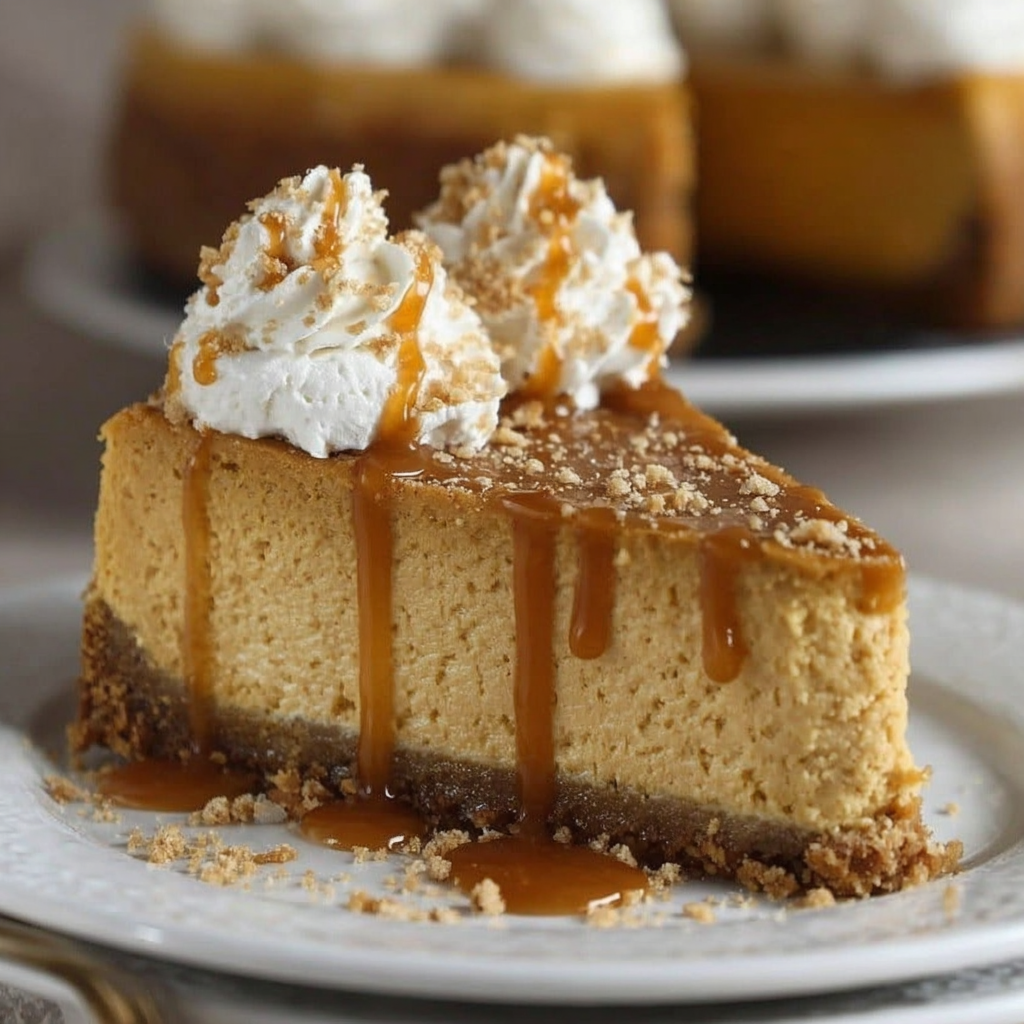
Silky, crack-free pumpkin cheesecake with warm spice, buttery graham crust, and optional caramel and rum-kissed whipped cream. Your effortless holiday showstopper.
Leave a comment & rating below or tag @forkelle on social media!
Enjoyed this recipe? Share it with friends and family, and don't forget to leave a review!
This recipe looks amazing! Can't wait to try it.
Comments are stored locally in your browser. Server comments are displayed alongside your local comments.

Join to receive our email series which contains a round-up of some of our quick and easy family favorite recipes.